
Lord Conrad
To do is to be.

My daughter brought me the news last night. Lord Conrad has passed.
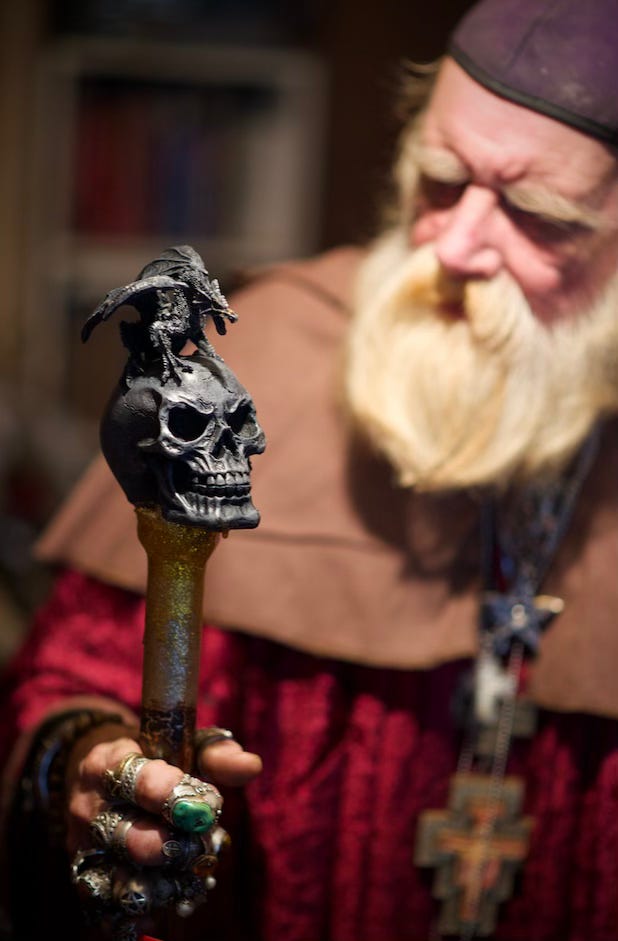
I first met him when he stood outside the train station. You couldn’t not notice him: often a deep red or purple cloak, a matching skull cap, a staff surmounted by a dragon or a human skull, copious undergarments, hands adorned by a hundred rings.
Once when I was talking to him a child of about seven came running up to him and hugged him, full of childish joy at seeing that the world of wizards, spells and dragons was obviously real.
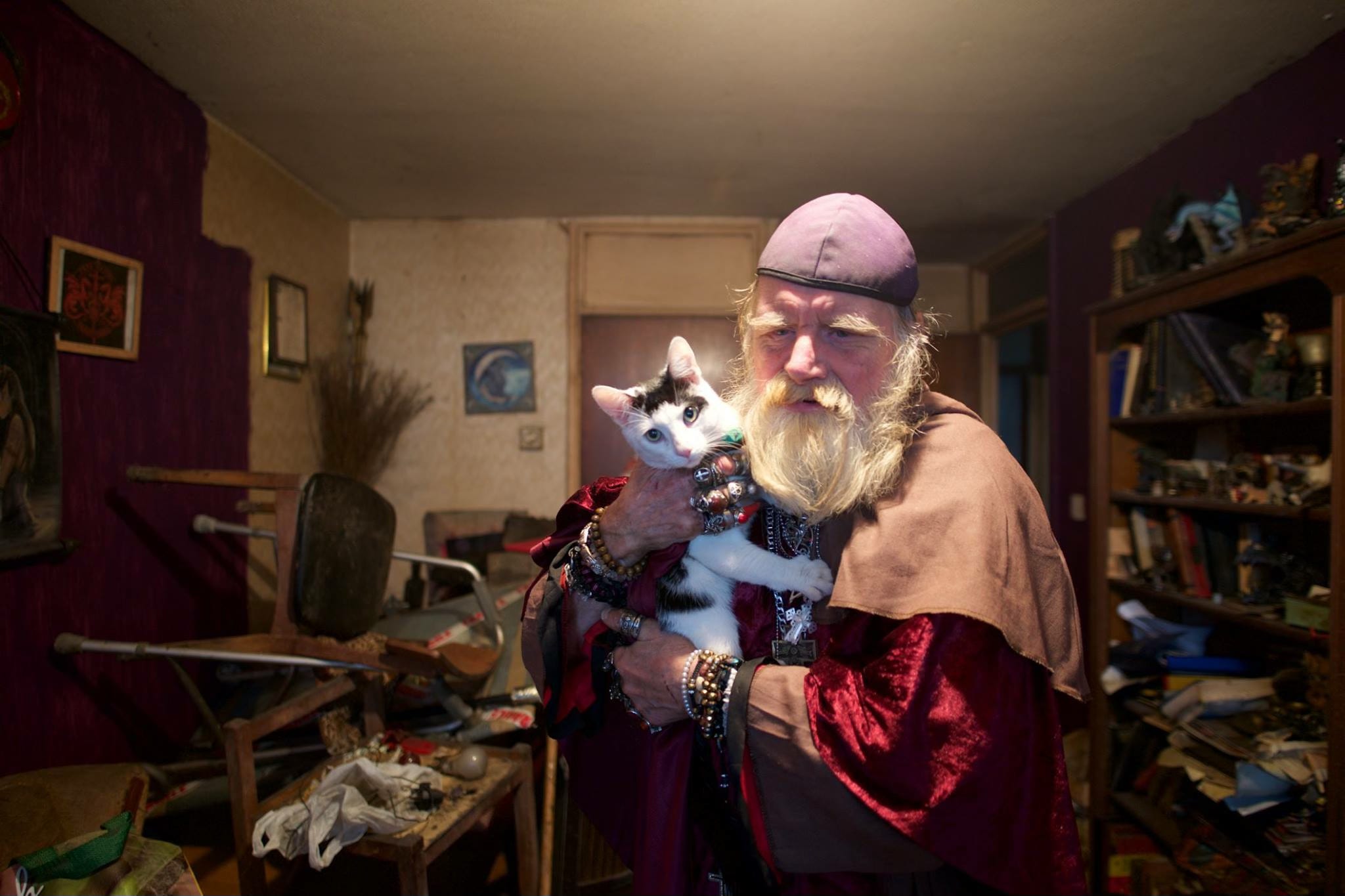
I think this is how his mind was too. Full of dreams.
Jean Paul Sartre inverted Plato’s epithet, and wrote “to do is to be”. He meant that we don’t have any essential nature, what we do is who we are. Or given that we are social animals, and everything is about how we are perceived by others – how we behave leads others to see that as our nature.
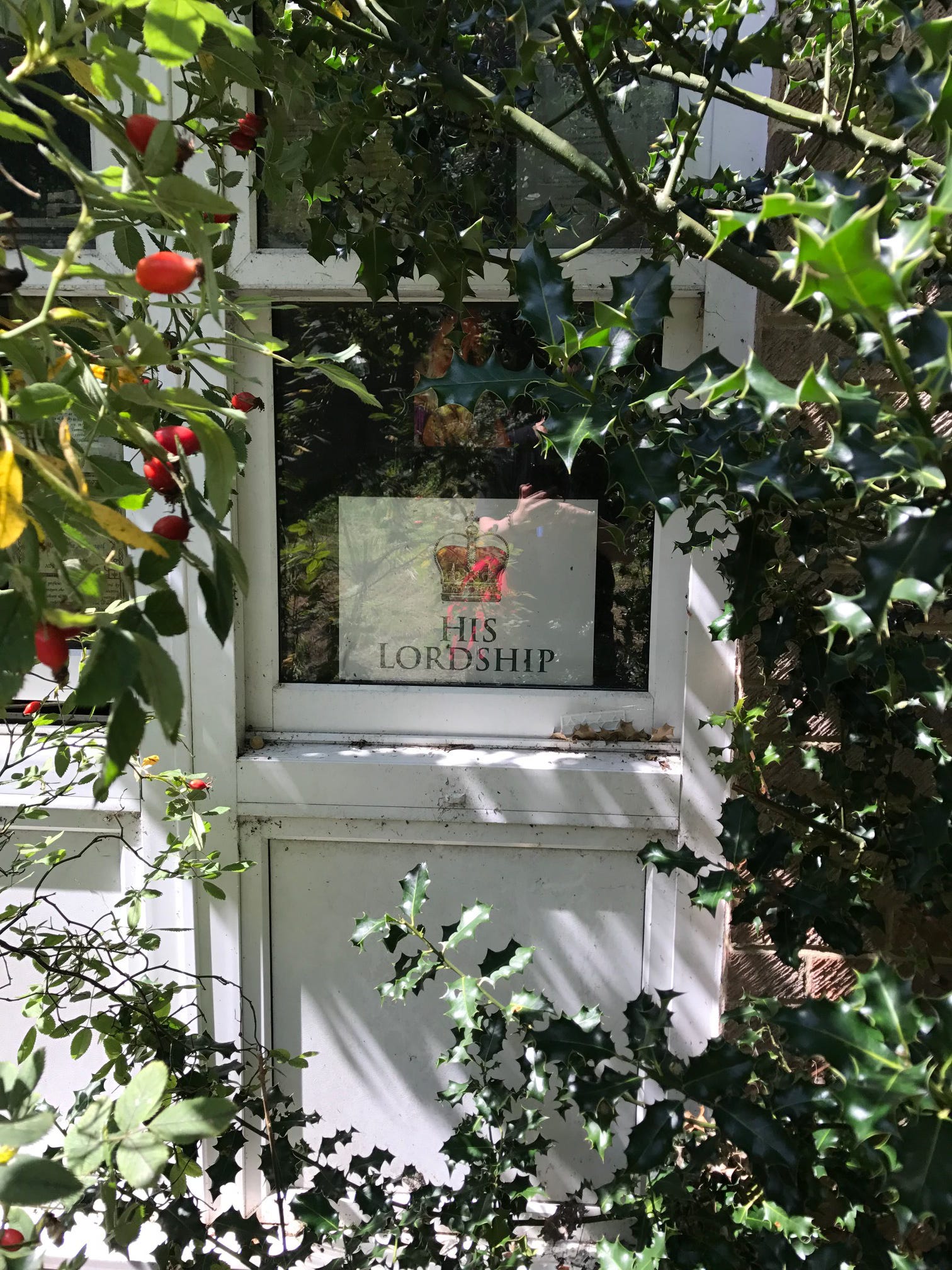
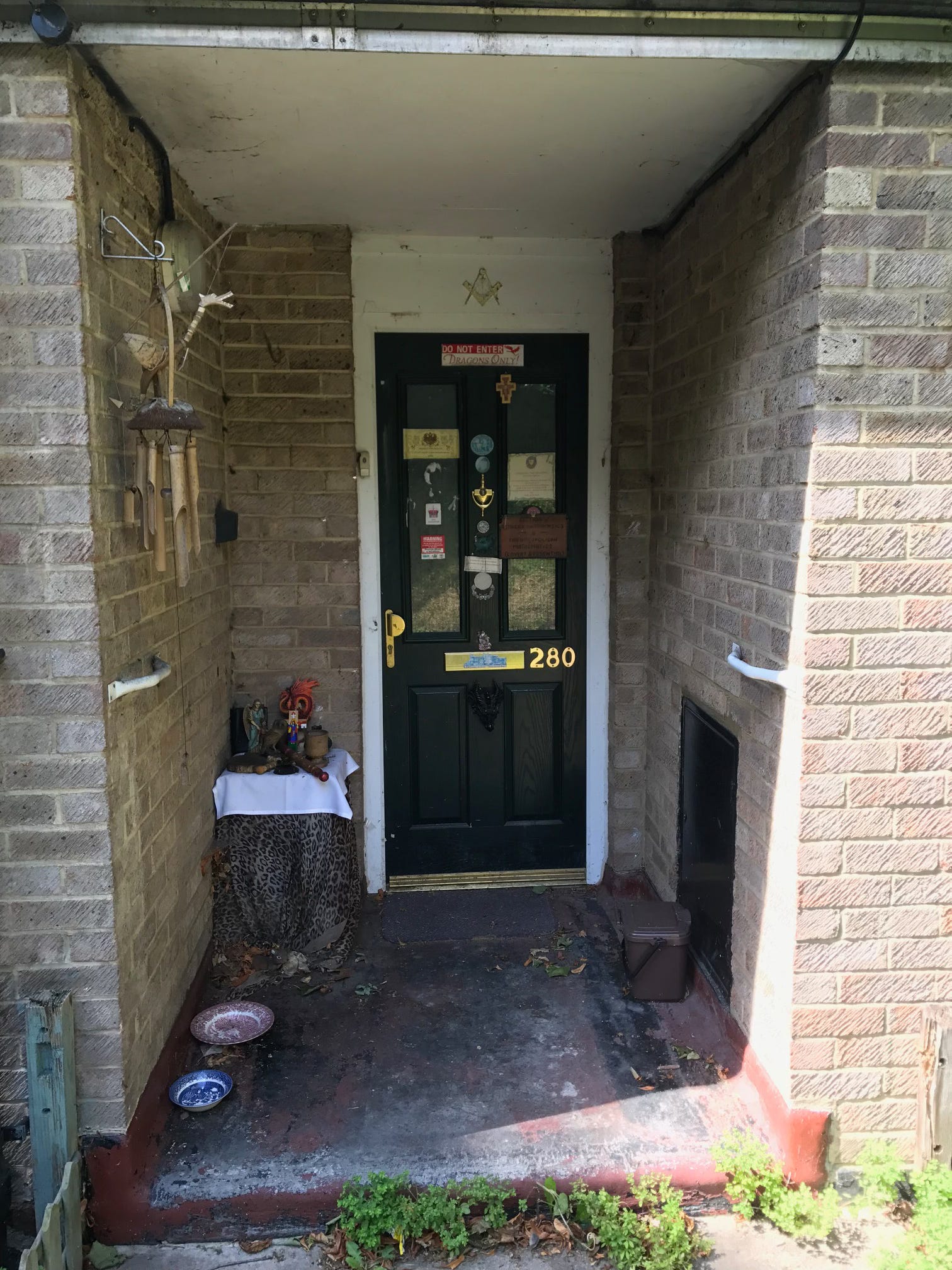
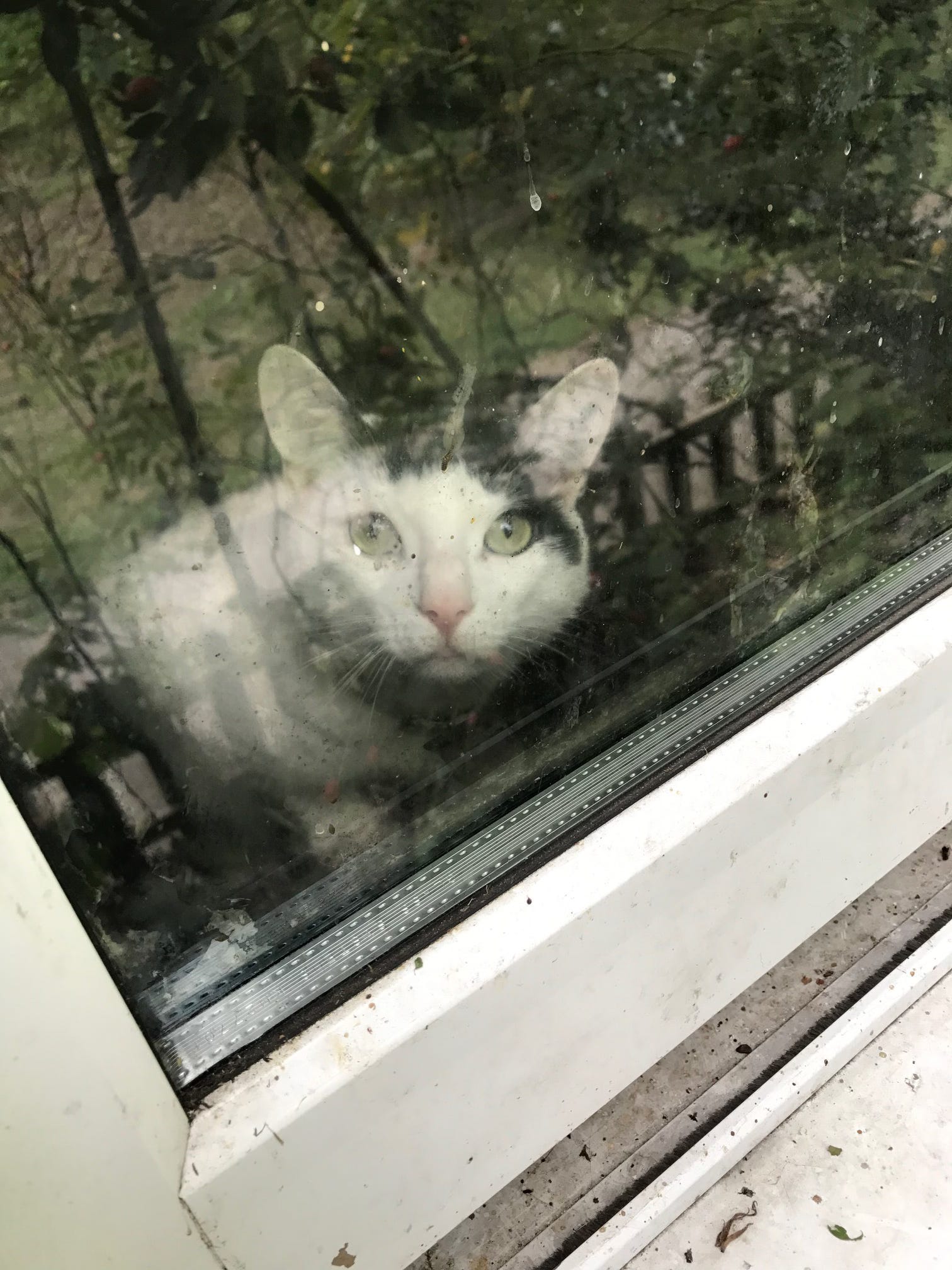
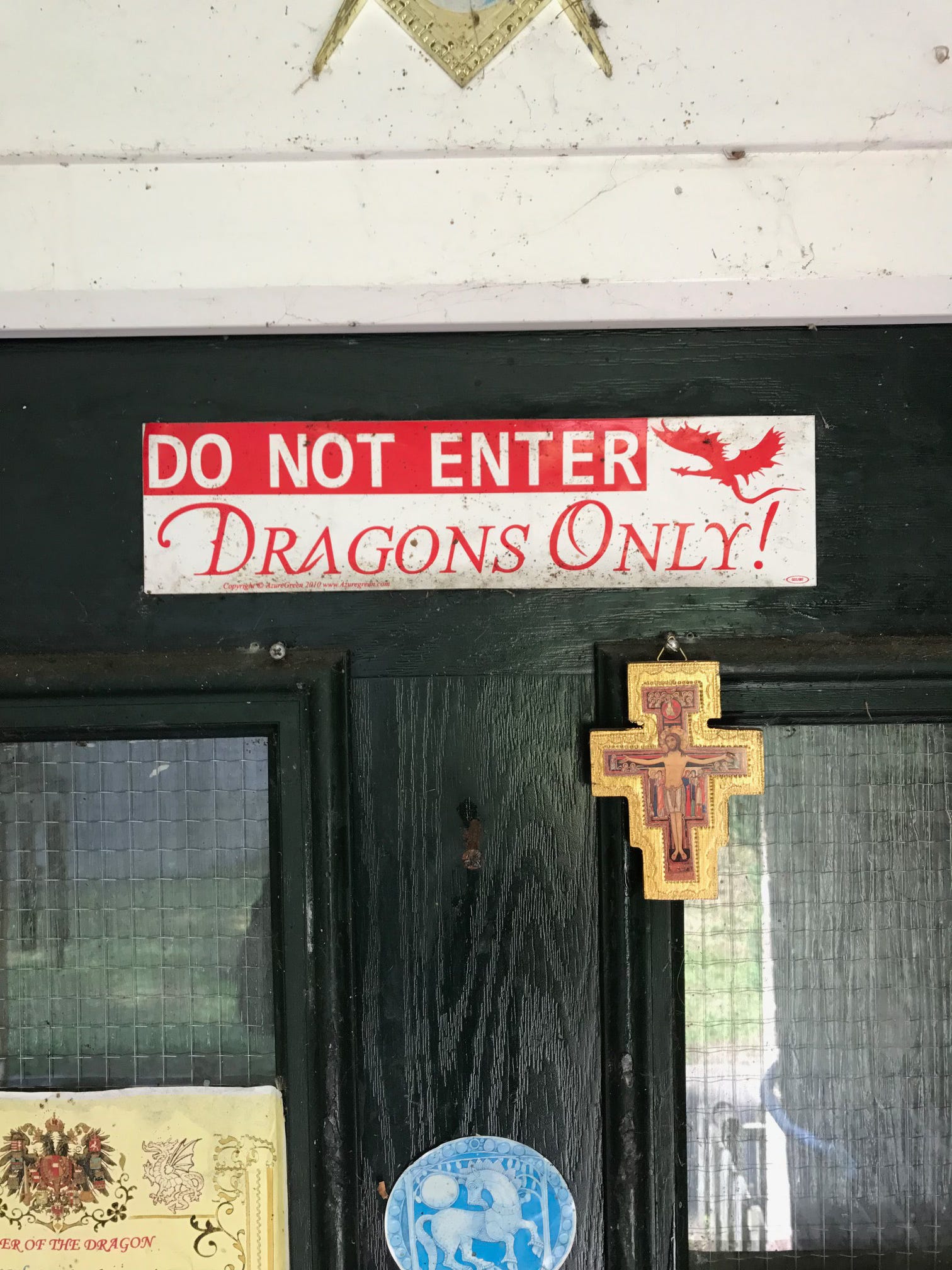
His flat was as emblazoned as he was. I was allowed in, despite being human.
Who was he really? One obituary said he claimed Lady Margaret Strickland was his grandmother, this seems as fantastical as his claim to have been trained as a child in wizardry and dragon-management in Iran.
I earned his trust by buying him sandwiches and drinks to fuel his vigil at the train station. I asked him: why do you wait here? He said, who will keep everyone safe if I don’t? After the commuters stopped arriving, he would stand in the high street, and then late at night outside bars and clubs, willing the punters a safe journey home.
I visited his flat a couple of times, it grew frustrating because his hearing was bad, and he played the television very loud and could not hear my knocking. There was a putsch – my understanding is that a couple of his neighbours, understandably nervous about the fire he had started with candles that burnt out his flat and killed his cat Zagan, engineered a visit from the RSPCA, who took away his dog and cats, which was shortly followed by the council moving him into a care home, whilst they refurbished the burnt-out flat. He never moved back in.
He said he had a child, a boy (a young man since Conrad was in his 70s at least). Estranged. I could never get anything else out of him. What had he done for work? Did he have siblings? When and why did he first start dressing as he did?
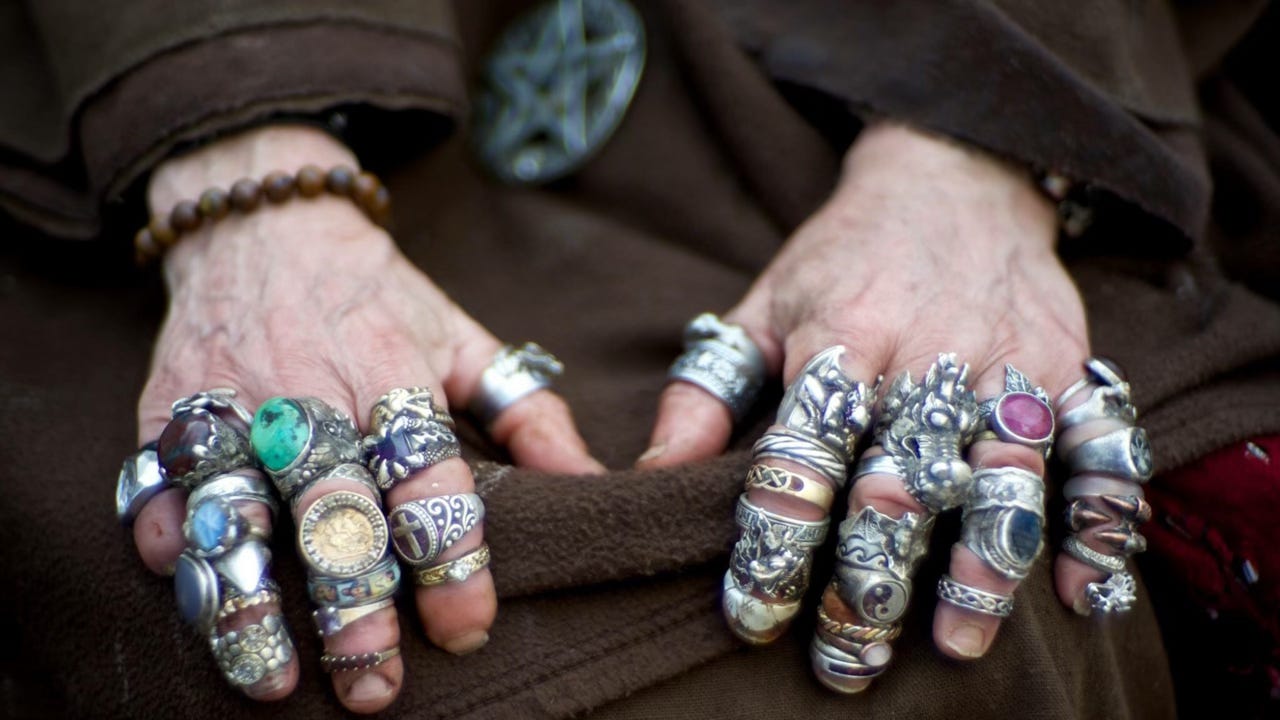
The rings. You can see the short finger on his right hand, his rings were too tight, the circulation was cut, the finger tip went black and fell off. The ones towards the ends of the fingers were super-glued on.
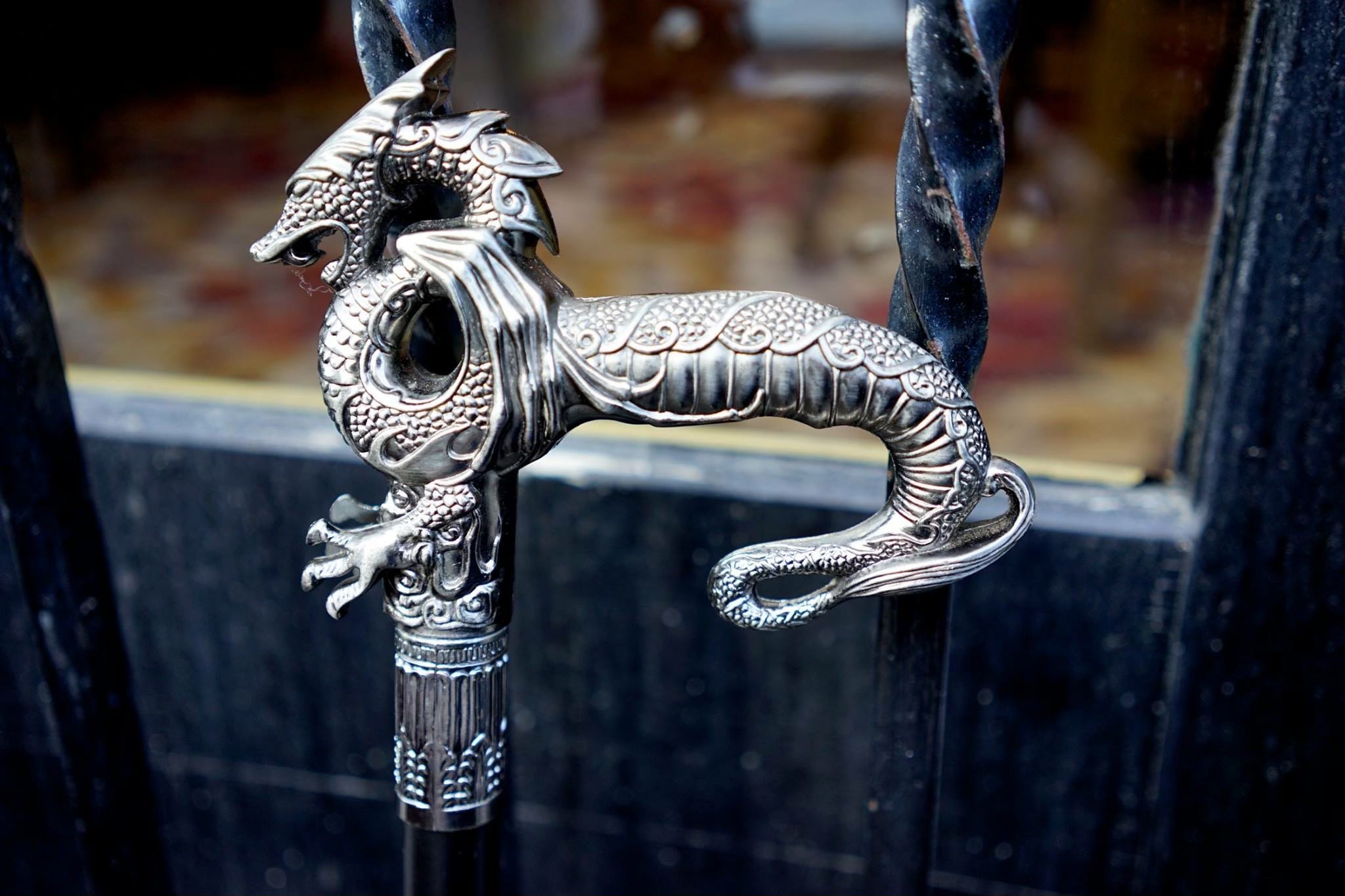
The terminal of one of his staves.
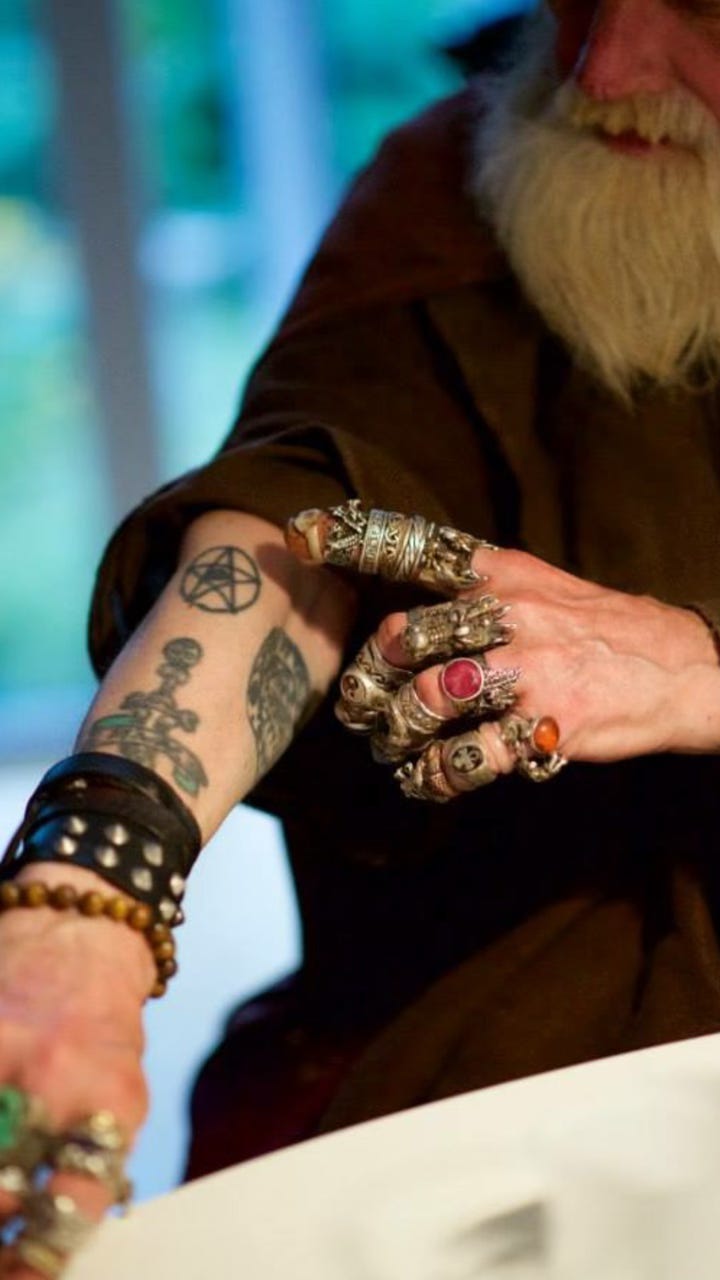
He had sigils all over his body.
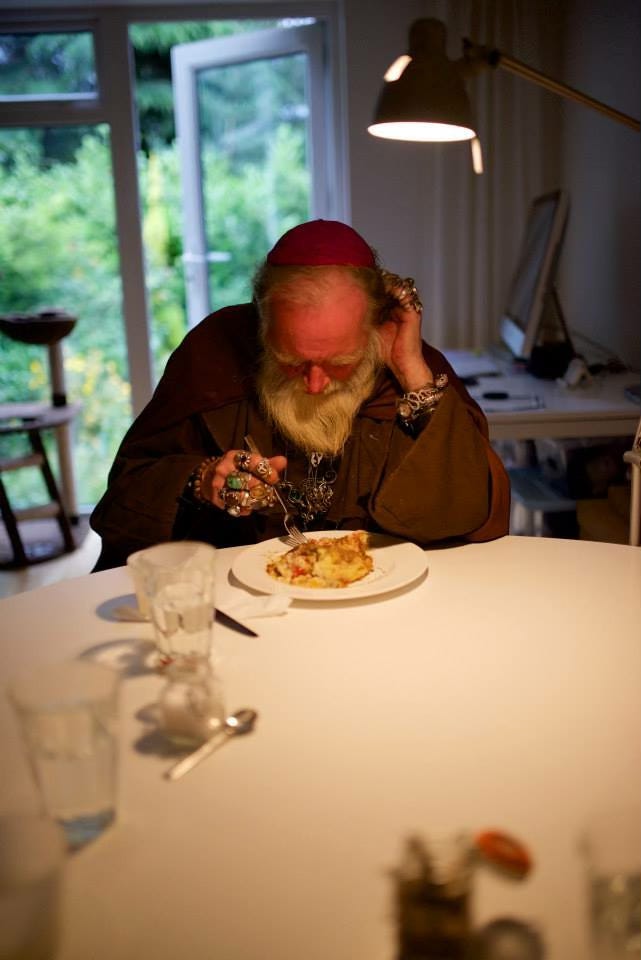
He once came round for supper. Fish pie, followed by strawberries and cream.
❦ ❦ ❦
It has always been difficult with such active minds for humans to distinguish between what is purely an idea inside their head, and what is absolutely real, out there in the world. You could argue the entire five millennia endeavour of philosophy is an on-going attempt to distinguish ideas from reality.
I think religions are a triumph of the mind over matter. The way religions describe the world is that the world was summoned into being by a mind. The intangible is what matters.
The world we live in now, our western piece of it anyway, the intangible is enjoying a boom. The internet and “artificial intelligence” are quite rapidly replacing the real with the not-real.
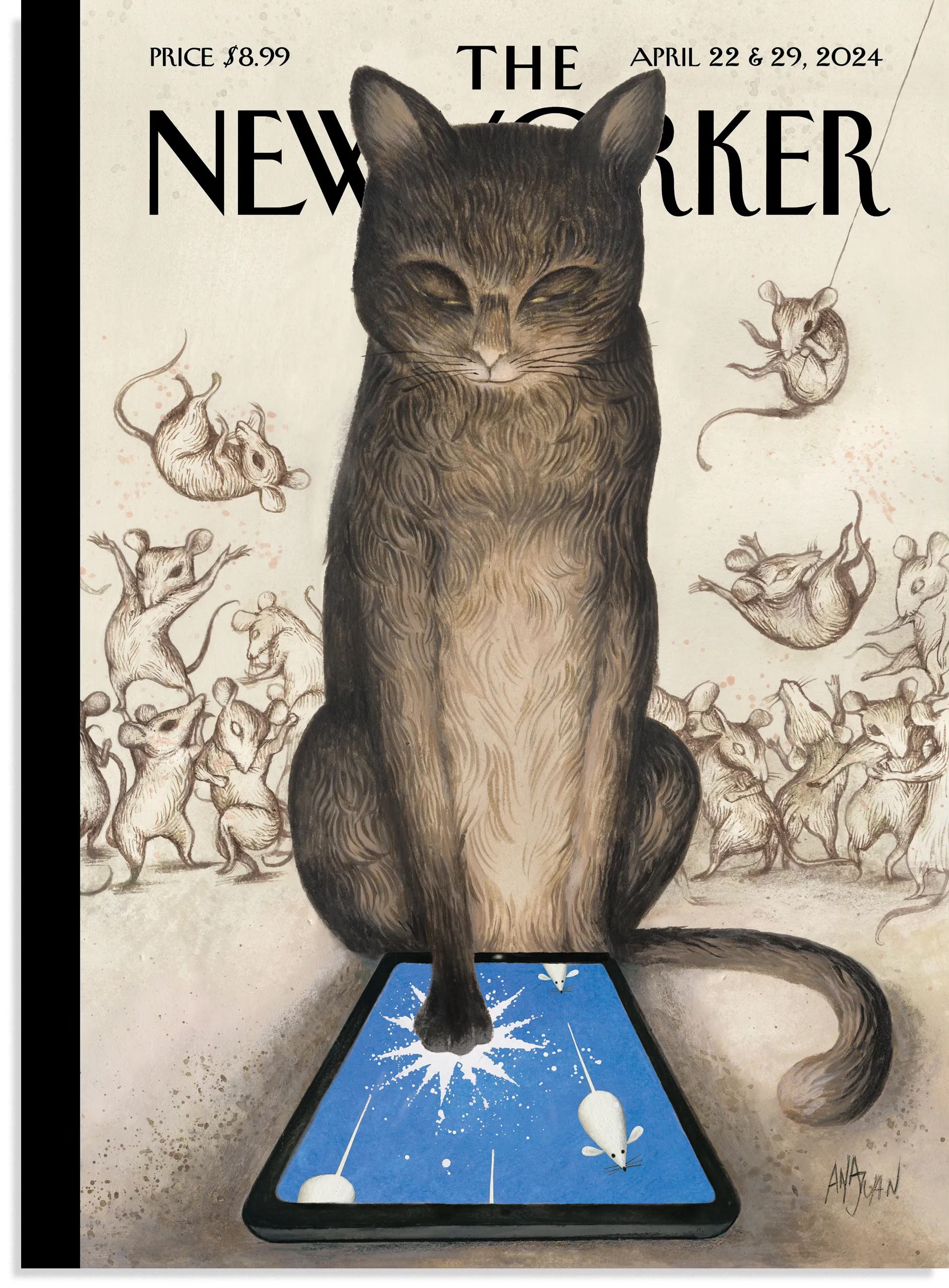
The un-real, with its algorithmic tricks and pay-offs, is more satisfying than the real.
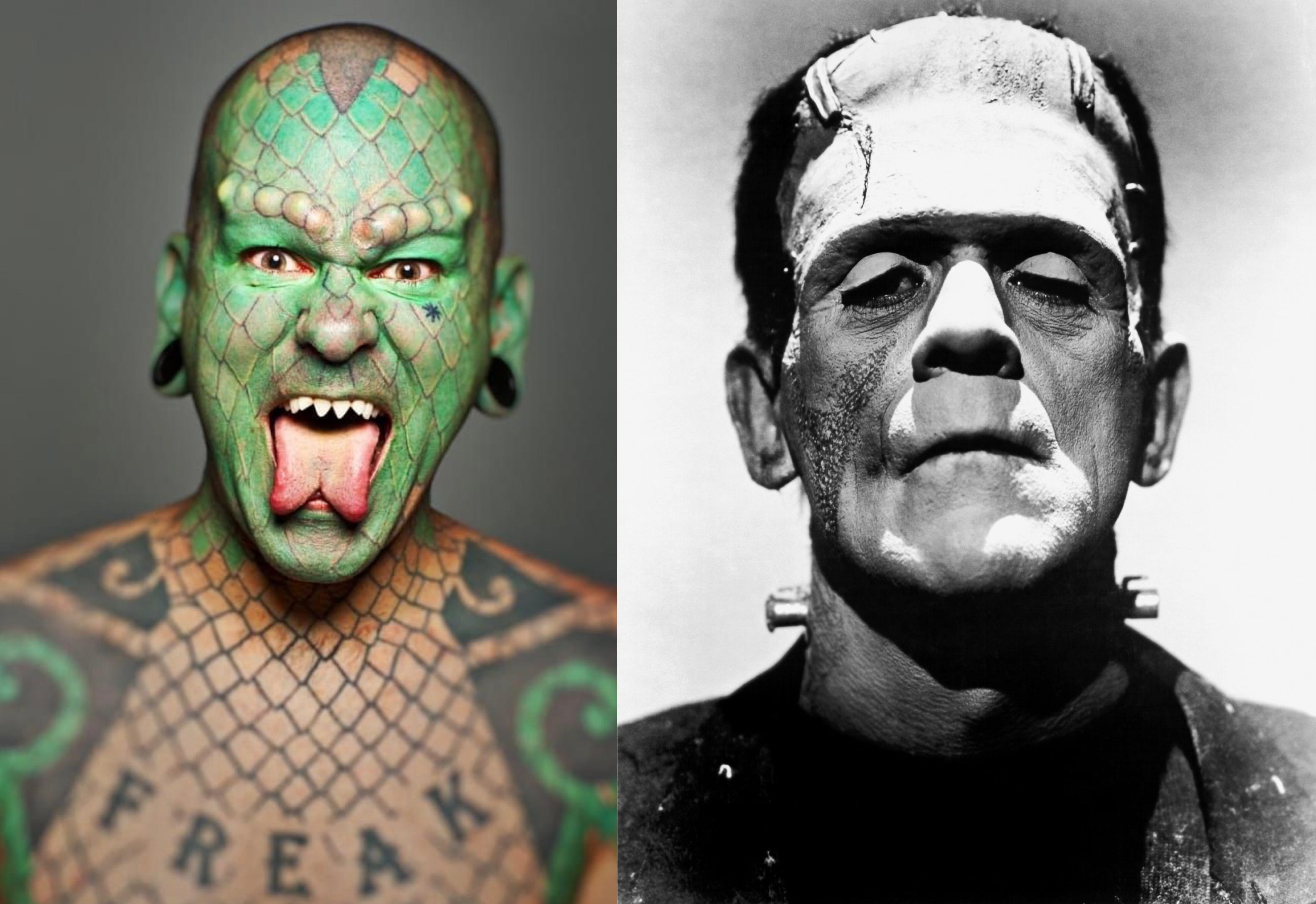
It’s understandable that people feel they can be anything they wish. Everything they see is people doing exactly that, you can be a cowboy, a monster, a double-agent, a rock-star, a chef. If you fancy being a lizard: why not?
One branch of the recent ballooning of genders – the idea that your nature is simply a “narrative construction” – is the “otherkin”. The OED defines these Otherkin folk as a human who “identifies as non-human”. The kinds of non-humans these people think they are is quite a list: mermaids, dogs, trees, clouds, rabbits, fairies, vampires. Why? “I get a tinge of excitement and the feeling of groundedness and belonging”.
Who would not love to feel a “tinge” just from being oneself?
(By the way, Conrad went to great lengths to pass as a wizard. How do people that identify as a tree walk around? Do they walk at all?)
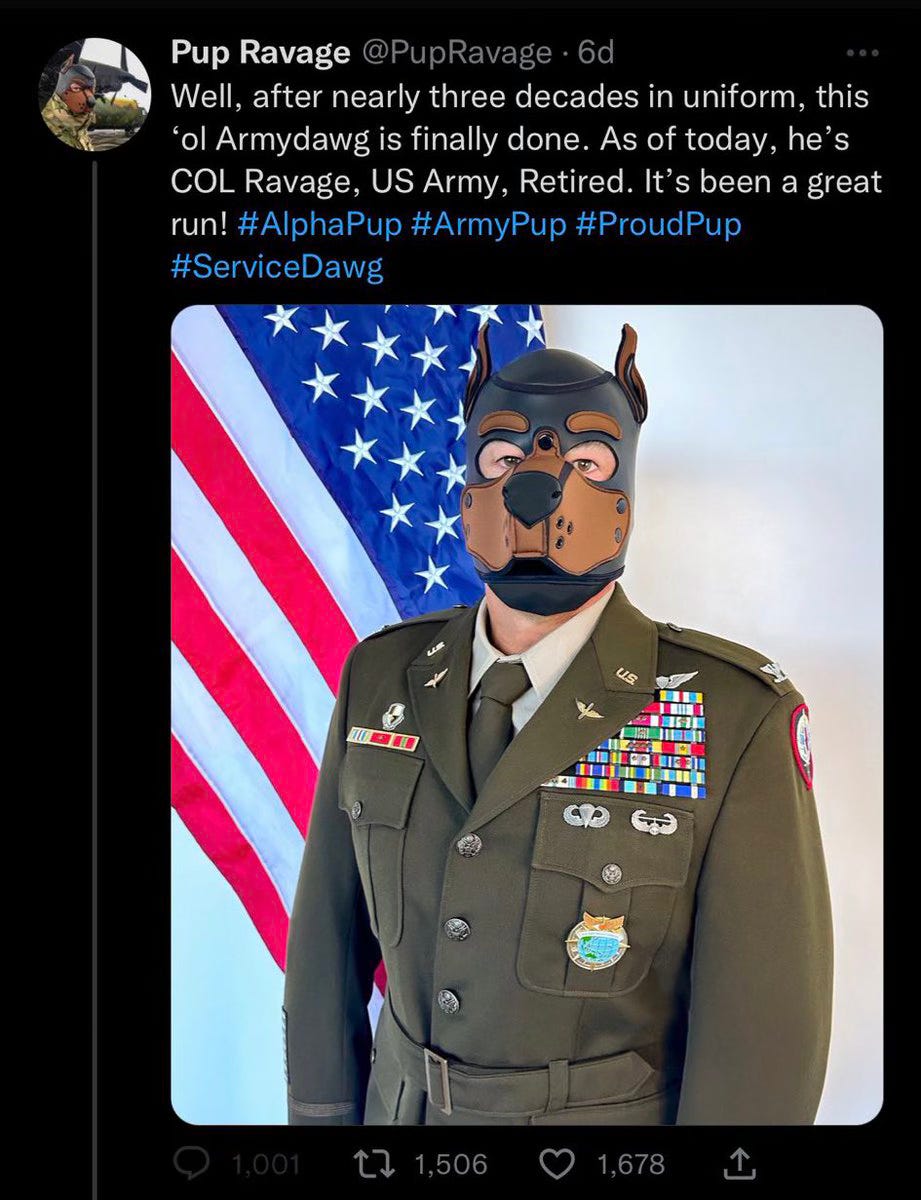
When I was a child, the strange identity thing was believing that you were Napoleon. This is a report from the Richmond Lunatic Asylum: “Ann Kelly, aged 37. Two years ill. Monomania. Pride. Imagines she is Napoleon. Very irascible, but easily calmed by a little praise. Dresses partly as a man. Speaks of herself as a man, and in the third person. Has made herself trousers, and a highly-ornamented cloak.”
Does this not sound, at least a little, like Lord Conrad.
❦ ❦ ❦
What it definitely does, is point us in the direction of mental dysfunction.
The great studier of personality disorders, particularly narcissism, Otto Kernberg, thought that under very great stress, the “self-concept” fractures, relations to others become confused, the whole sense of self and others becomes chaotic.
The solution is the creation of a “pathological grandiose self”, rewarding yourself with power, brilliance, being beloved, admirable. Creating a seemingly stable world in which you tower above others with your achievements and self-sufficiency. “I am magnificent, fully-realised, complete, I don’t need anyone else”.
Everyone else is divided into types: admirable, with qualities that must be mimicked, utterly worthless, or an enemy who must be fought.
An idealised self has been constructed to avoid the chaos of the real self.
Is this Lord Conrad?
❦ ❦ ❦
In The Republic, book seven, Plato writes of the allegory of the cave.
… I will show you something about the nature of education and ignorance. Picture the following in your mind. Imagine human beings living in an underground cave-like residence. Its entrance opens up to the light and reaches all along the cave. They have been there since their childhood, their ankles and necks chained, unable to move or turn their heads, forced to look ahead … imagine that people walk behind the wall and carry various artifacts that extend above the wall. These artifacts include carvings of humans and other animals … do you think they see anything else except their own shadows, or the shadows of one another, which light from the fire casts on to the opposite wall of the cave?
It’s an elaborate metaphor. What Plato was driving at was what the Hindus and Buddhists call “Maya”: the world you regard as real, is an illusion. Plato says reality is nothing more than the image of something really real, we live with merely shadows. What is truly real is intangible.
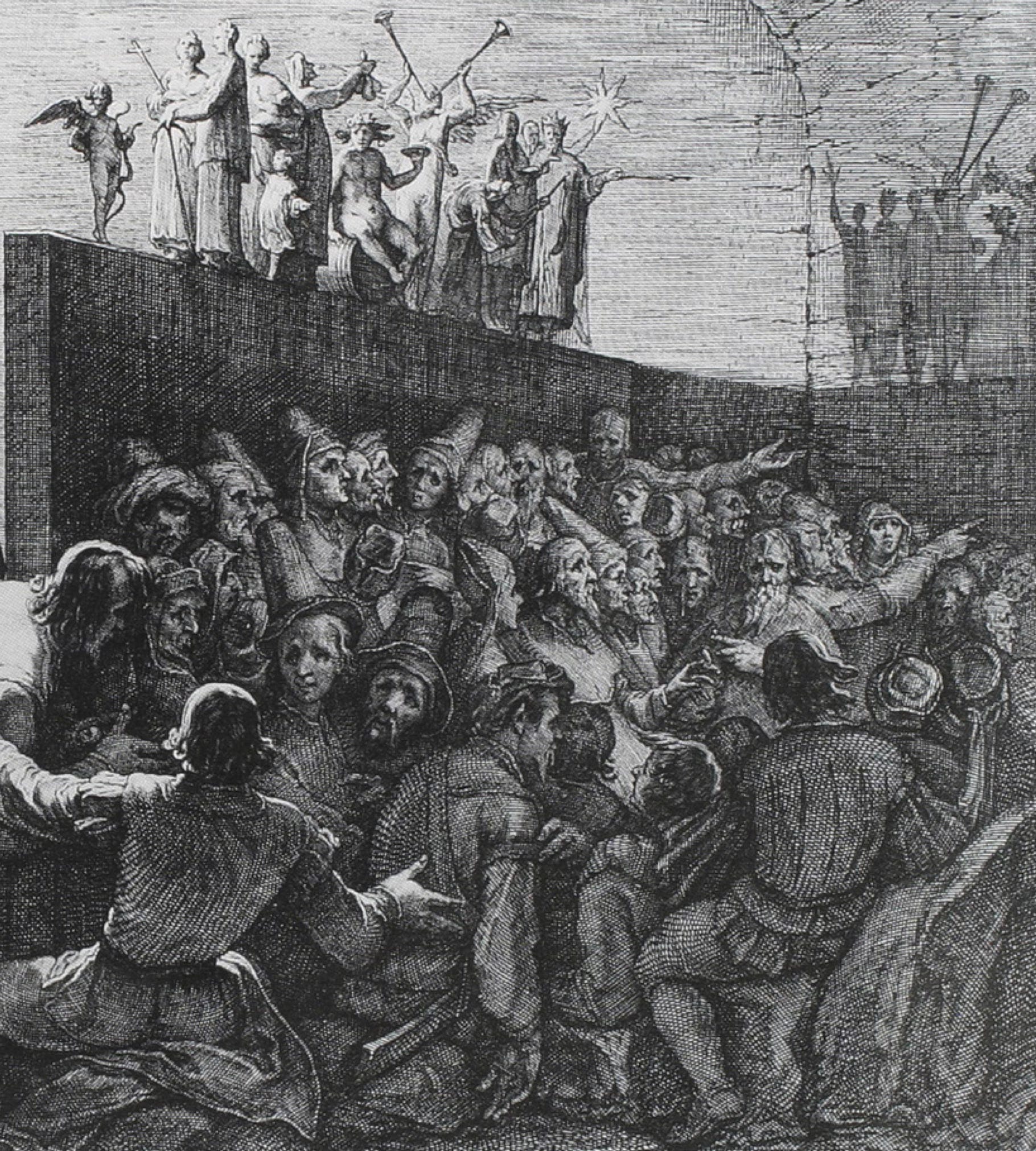
A drawing of Plato’s cave. What is this but cinema? Or your laptop or phone?
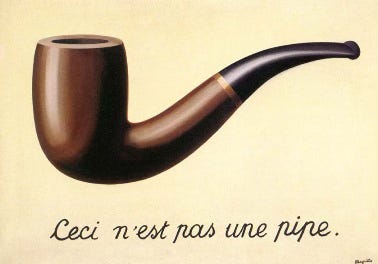
This is not a pipe. It is an image of a pipe. What is real, what is imagination?
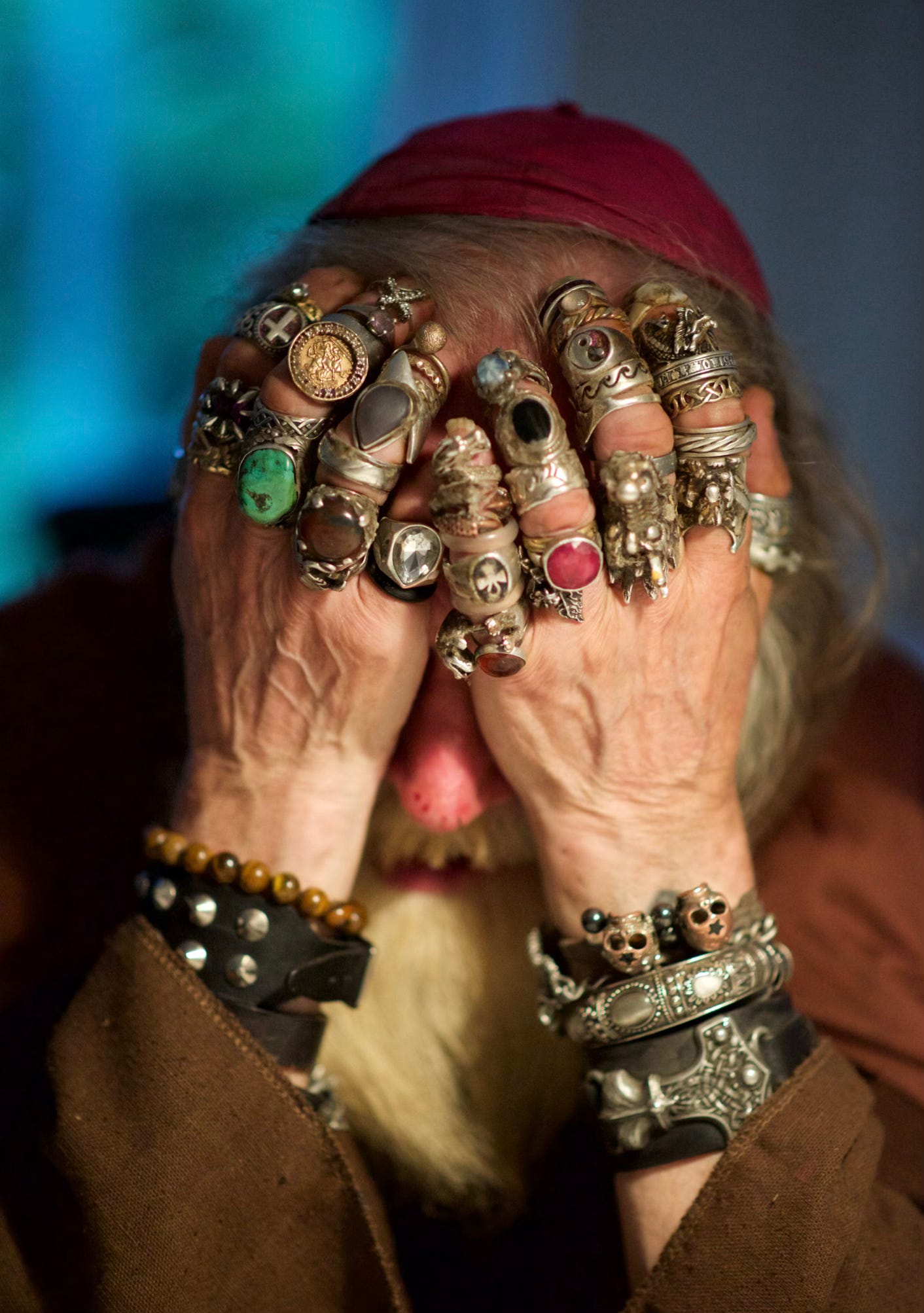
Adieu Lord Conrad. I hope that when Charon is rowing me across the river Styx, that you are there with my mum and my Jack Russell, my dad and his brothers – standing there with your staff, beckoning come here with the boat, join us. I’ll bring a cat with me.
Quentin Newark
Feeling mortal